Digital marketing in 2026 is not about chasing every new tool or platform.
The real goal is simple: help the right people find your business, trust your brand, and take action.
Customers now move across Google, AI answers, social media, short videos, email, ads, online stores, and websites before they make a choice. So your marketing cannot work in separate pieces anymore.
The strongest digital marketing trends in 2026 all point to one idea: connected growth.
AI can help you work faster. SEO and AI search help people find clear answers. Short form video and UGC build trust. Privacy first data helps you follow up the right way. Omnichannel marketing connects the full customer path. Social commerce helps people shop where they spend time. A fast website turns traffic into leads and sales.
This guide is for U.S. small businesses, startups, service companies, ecommerce brands, and growing teams that want smarter marketing choices and better results.
Quick Answer: What Are the Top Digital Marketing Trends in 2026?
The top digital marketing trends in 2026 are AI powered marketing, AI search optimization, short form video, UGC, privacy first data, omnichannel marketing, social commerce, and faster conversion focused websites.
Here are the 7 trends businesses should watch:
- AI powered marketing and automation
- AI search, AEO, and GEO optimization
- Short form video, UGC, and social search
- Privacy first marketing and first party data
- Omnichannel customer journeys
- Social commerce and creator led trust
- Fast, conversion focused web experience
The best strategy is not to use every trend at once. The better move is to choose the trends that fit your audience, offer, budget, and business goals.
2026 Digital Marketing Trends: Quick Summary Table
| Trend | Why It Matters | How Businesses Can Use It |
| AI marketing | Saves time and improves targeting | Use AI for ideas, segmentation, and testing |
| AI search | Users get answers before clicking | Create clear answer ready content |
| Short form video | Builds fast trust | Use demos, tips, reviews, and stories |
| Privacy first data | Builds trust and improves follow-up | Grow email, CRM, and consent based lists |
| Omnichannel | Customers move across platforms | Connect ads, email, social, and website |
| Social commerce | Social platforms support buying | Use product content, reviews, and UGC |
| Web experience | Traffic needs to convert | Improve speed, mobile UX, forms, and CTAs |
1. AI Powered Marketing and Automation
AI is one of the biggest digital marketing trends in 2026 because it helps teams move faster.
But AI is not a full strategy by itself. It works best when it supports human planning, clear brand voice, and real customer needs.
Why This Trend Matters
AI can help with research, content ideas, customer segmentation, ad testing, email flows, chat support, reporting, and campaign planning.
For a small team, this can save hours. For a growing company, it can help organize more data and make faster decisions.
AI can support:
- Audience research
- Content planning
- Email automation
- Chatbot support
- Ad testing
- Customer segmentation
- Reporting summaries
- Product recommendations
- Lead follow up workflows
The key is review. AI output should be checked before it goes live. Your brand voice, offer, facts, and customer promises still need human control.
How to Use It
Use AI to speed up work, not replace strategy.
For example, a business can use AI to create content ideas, group leads by interest, write first draft email flows, review ad performance, and spot customer patterns.
Then a human should review the final copy, tone, offer, facts, and call to action.
2. AI Search, AEO, and GEO Optimization
Search is changing.
People still use Google, but they also get answers from AI Overviews, chat tools, answer engines, and search assistants. This means businesses need content that gives clear answers, builds trust, and explains services in a way both people and AI systems can read.
That is where AEO and GEO come in.
AEO means Answer Engine Optimization. GEO means Generative Engine Optimization. Both focus on making your content clear, useful, and easy to read in AI driven search results.
Why This Trend Matters
Users may get answers before they click a website.
That does not mean SEO is dead. It means SEO needs to be clearer, more helpful, and more direct.
Businesses should write content that answers real questions fast. They should also make their brand, services, locations, and expertise easy to identify.
How to Use It
Create content that answers customer questions near the top of the page.
Use:
- Clear H1, H2, and H3 headings
- Short answer paragraphs
- Helpful FAQs
- Service and location details
- Internal links to related pages
- Clear brand mentions
- Accurate content
- Updated examples
- Strong page structure
For example, instead of writing a vague blog post about SEO, a business can answer exact questions like “How long does SEO take?” or “What do professional SEO services include?”
3. Short Form Video, UGC, and Social Search
Short form video is still one of the strongest ways to earn attention in 2026.
But the winning style has changed. People do not want polished ads all the time. They want useful, real, simple content that answers questions and shows proof.
That is why short form video, UGC, and social search now work together.
UGC means user generated content. It can include customer reviews, real product videos, testimonials, unboxing clips, before and after content, and creator style posts.
Why This Trend Matters
People search on TikTok, YouTube, Instagram, Pinterest, LinkedIn, and other social platforms to learn about brands, products, and services.
They may search for:
- Product reviews
- Local services
- Before and after examples
- How to videos
- Brand comparisons
- Customer stories
- Tips and answers
This means your social content should be easy to find, not just easy to scroll past.
How to Use It
Create short videos that answer real customer questions.
Good short form video topics include:
- Product demos
- Service explainers
- Customer questions
- Reviews
- Tips
- Behind the scenes clips
- Common mistakes
- Quick comparisons
- Before and after examples
4. Privacy First Marketing and First Party Data
Privacy first marketing is no longer optional.
Customers want to know how their data is used. Businesses also need cleaner ways to track leads, segment audiences, and follow up without depending too much on third party tracking.
This is why first party data matters.
First party data is information your business collects directly from customers or prospects. This may include email signups, form submissions, purchase history, CRM data, surveys, loyalty programs, and customer preferences.
Why This Trend Matters
Better data helps you send better messages.
Instead of showing the same offer to everyone, you can group people by interest, location, purchase stage, or past behavior.
For example:
- A new lead gets an intro email
- A cart abandoner gets a reminder
- A past buyer gets a reorder offer
- A local customer gets a service area update
- A high intent visitor gets a booking CTA
This makes marketing more useful and less random.
How to Use It
Use:
Build your own customer data system.
- Email signups
- SMS lists where allowed
- CRM tags
- Lead forms
- Customer surveys
- Loyalty programs
- Downloadable guides
- Quote request forms
- Purchase history
- Review requests
Be clear about what users are signing up for. Give users control where required. Keep the value simple and honest.
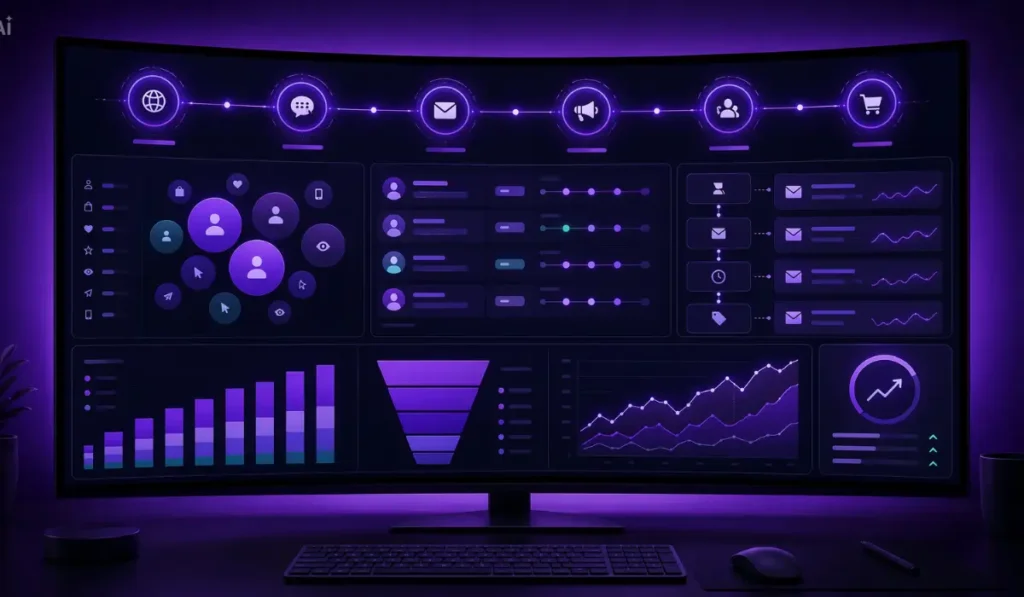
5. Omnichannel Customer Journeys
Customers rarely buy after one click.
They may watch a video, visit your website, read reviews, search your brand, click a Google Ad, join your email list, compare your offer, and come back later.
That is why omnichannel marketing matters in 2026.
Omnichannel marketing means your website, ads, email, social media, content, and CRM work together instead of acting like separate campaigns.
Why This Trend Matters
People move across platforms before they buy.
If your message changes too much between channels, users may lose trust. If your follow up is weak, you may lose leads that were close to converting.
A connected journey helps customers move from interest to action.
How to Use It
Build a simple customer path.
For example:
- A person sees your short video
- They visit your website
- They read a service page
- They leave without booking
- They see a retargeting ad
- They join your email list
- They receive a helpful follow up
- They book a consultation
That is a connected system.
Track small actions too, such as video views, email clicks, form starts, add to cart actions, quote requests, calls, and return visits. These are micro conversions. They help you see where people are in the buying process.
6. Social Commerce and Creator Led Trust
Social media is not just for awareness anymore.
In 2026, social platforms help people discover, compare, and buy. Social commerce connects product content, reviews, creator videos, customer proof, and shopping paths.
This matters for ecommerce brands, local product businesses, service companies, and any brand that needs trust before a sale.
Why This Trend Matters
People trust people.
A customer review, creator demo, product walkthrough, or real user story can make a brand feel more believable than a polished ad.
Social proof can help reduce doubt before someone clicks, calls, or buys.
How to Use It
Use creator style content and customer proof in your marketing.
This may include:
- Customer photos
- Product reviews
- Creator demos
- Unboxing videos
- Before and after content
- Testimonial clips
- Product explainers
- Social proof in ads
- Reviews on landing pages
For e-commerce stores, link social content to product pages. For service businesses, link social content to booking pages, quote forms, or service pages.
7. Fast, Conversion Focused Web Experience
A business can have great ads, strong SEO, and active social media, but still lose sales if the website is slow or confusing.
Your website is where many users decide whether to trust you.
That is why web experience and conversion rate optimization matter in 2026.
Why This Trend Matters
Traffic is only useful if users can take action.
A slow website, long form, unclear offer, weak mobile layout, or confusing menu can waste good traffic.
This affects SEO, Google Ads, social traffic, email campaigns, and ecommerce sales.
How to Use It
Make your website fast, clear, and easy to use.
Focus on:
- Mobile speed
- Clear headlines
- Short forms
- Strong CTAs
- Click to call buttons
- Easy navigation
- Trust signals
- Reviews
- Clear service pages
- Product page clarity
- Fast checkout
- Image compression
- Clean page layout
For local service businesses, make it easy to call or request a quote. For ecommerce stores, make product pages and checkout simple.
How Benzify Helps Businesses Use These Digital Marketing Trends
Trends only help when they are turned into action.
Benzify helps U.S. businesses connect AI, SEO, social media, paid ads, email, automation, ecommerce marketing, and web design into one clear growth system.
AI Tools and Automation
Benzify can help businesses use AI for marketing workflows, content planning, segmentation, reporting, and follow up automation.
SEO, AEO, and AI Search Content
Benzify can help improve search visibility with SEO, answer focused content, blog updates, service pages, FAQs, and AI search optimization.
Social Media and Short Form Video
Benzify can help plan social media content, short-form videos, UGC-style content, platform strategy, and engagement support.
Email, CRM, and First Party Data
Benzify can help build email flows, lead follow up systems, CRM segments, and consent customer lists.
Google Ads and Omnichannel Campaigns
Benzify can help connect paid ads with landing pages, retargeting, email follow up, and conversion tracking.
Web Design and Conversion Optimization
Benzify can help improve website speed, page structure, UX, landing pages, service pages, and ecommerce store design.
Want a digital marketing strategy that fits 2026 search, social, AI, and customer behavior?
Final Takeaway
The biggest digital marketing trends in 2026 are not separate tricks.
They work best when connected.
AI helps speed up planning and testing. AI search changes how people find answers. Short form video and UGC build trust. First party data supports better follow up. Omnichannel marketing connects the full customer path. Social commerce helps people buy through content. A fast website turns attention into action.
The businesses that win will not be the ones trying every tool. They will be the ones building a clear system that matches how customers search, compare, trust, and buy.
FAQs About Digital Marketing Trends in 2026
What are the top digital marketing trends in 2026?
The top digital marketing trends in 2026 include AI powered marketing, AI search optimization, short form video, UGC, privacy first data, omnichannel marketing, social commerce, and conversion focused web experience.
How is AI changing digital marketing?
AI is helping businesses plan content, segment audiences, test ads, automate follow up, analyze data, and improve customer journeys. Human review is still needed to keep messages accurate and on brand.
Is SEO still useful in 2026?
Yes. SEO is still useful, but it now needs clear answers, strong content, technical health, local visibility, and AI search readiness. SEO should focus on qualified traffic, not just rankings.
Why is short form video important for businesses?
Short-form video helps businesses explain products, answer questions, show proof, and build trust fast. It also supports social search on platforms like TikTok, Instagram, YouTube, and LinkedIn.
What is privacy first marketing?
Privacy first marketing means collecting and using customer data in a clear, consent based way. It often includes email lists, CRM data, surveys, loyalty programs, and clear privacy practices.
How can Benzify help with digital marketing strategy?
Benzify can help connect SEO, AI tools, Google Ads, email marketing, social media, ecommerce marketing, automation, web design, and reporting into one digital growth strategy.