Online stores do not grow from traffic alone.
You can bring thousands of people to your website, but if your product pages are weak, your ads are unclear, your follow-up is missing, or your checkout creates friction, sales will still fall short.
That is why U.S. businesses need smart e-commerce marketing in 2026.
Smart ecommerce marketing connects the full sales journey. It helps the right shoppers find your products, trust your brand, buy with less friction, return if they leave, and come back after the first purchase.
This guide is for U.S. online stores, Shopify and WooCommerce brands, local businesses selling online, startups, and ecommerce teams that want more sales without wasting ad spend.
Quick Answer: How Does Smart Ecommerce Marketing Boost Sales?
Smart ecommerce marketing boosts sales by connecting traffic, trust, conversion, recovery, and retention.
It helps businesses attract the right shoppers through SEO, Google Shopping, paid ads, and social commerce. Then it improves product pages, email flows, SMS reminders, reviews, retargeting, and analytics so more visitors become repeat customers.
The goal is not just more clicks. The goal is better traffic, stronger trust, higher conversions, and more repeat purchases.
What Smart Ecommerce Marketing Means in 2026
Smart ecommerce marketing is more than running ads or posting products on social media.
It is a connected growth system.
Each channel has a job. SEO helps shoppers find your products. Paid ads bring targeted traffic. Social content builds awareness and trust. Email and SMS bring shoppers back. Reviews reduce doubt. Analytics show what is working.
| Stage | Marketing Goal | Example |
| Attract | Bring the right shoppers | SEO, Shopping ads, social media |
| Convert | Help users buy | Product pages, offers, checkout |
| Recover | Bring back lost buyers | Retargeting, email, SMS |
| Retain | Increase repeat sales | Loyalty, reviews, follow-up |
| Measure | Improve profit | ROAS, CAC, LTV, conversion rate |
A smart strategy does not treat these as separate pieces. It connects them into one customer journey.
1. Use SEO and Product Content to Capture Buyer Intent
Ecommerce SEO helps your products show up when people are already searching.
That matters because search traffic often carries strong buying intent. Someone searching for a product, size, feature, or comparison may be closer to making a purchase than someone scrolling casually.
Product Pages Should Answer Buying Questions
A product page should do more than show a title and price.
It should answer the questions shoppers ask before they buy:
- What is this product?
- Who is it for?
- What problem does it solve?
- What size, color, or option should I choose?
- What is included?
- How does shipping work?
- What if I need to return it?
- Why should I trust this brand?
Clear product content helps both shoppers and search engines understand the page.
Category Pages Should Target Search Demand
Category pages can rank for broader product terms.
For example, a store may have category pages for product types, styles, brands, use cases, or price ranges. These pages should include clear headings, short helpful copy, internal links, and clean product organization.
Blog Content Should Support Product Discovery
Blog content can help shoppers earlier in the buying journey.
Useful blog topics may include buying guides, product comparisons, care tips, seasonal guides, and problem solving content. These articles can link to product pages and category pages naturally.
2. Optimize Product Feeds for Google Shopping and Paid Channels
Product feeds are easy to ignore, but they matter a lot for ecommerce marketing.
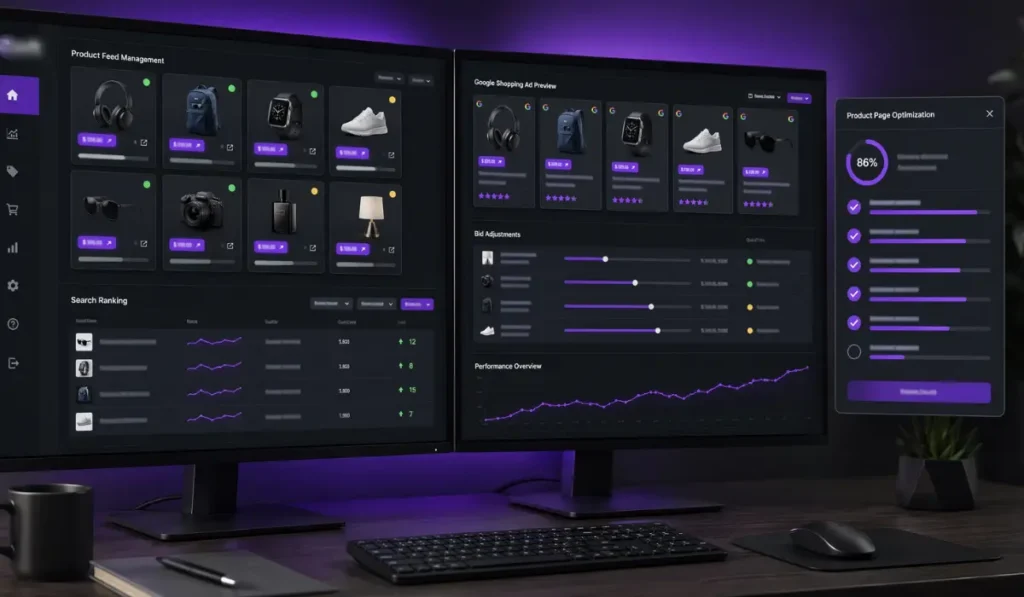
Your product feed tells platforms like Google Shopping and other ad systems what you sell. If your feed has missing, weak, or inaccurate data, your campaigns may not perform well.
Why Product Feeds Matter
A strong product feed helps your products appear for more relevant searches.
It can also help improve ad quality, product matching, and campaign structure.
What Strong Product Data Includes
Good product data should include:
- Clear product title
- Accurate images
- Price
- Availability
- Product category
- Product description
- Shipping information
- Promotions
- Reviews or ratings when available
Common Product Feed Mistakes
Common feed issues include:
- Vague product titles
- Missing product details
- Outdated pricing
- Wrong availability
- Poor image quality
- Weak category mapping
- Missing shipping details
- Product pages that do not match the feed
Fixing feed quality can make your paid and organic product visibility stronger.
3. Use Paid Ads with Better Targeting and Creative Testing
Paid ads can help ecommerce brands reach buyers faster.
But in 2026, success is not about spending more money without a plan. It is about better targeting, stronger creative, better landing pages, and clear tracking
Google Ads for High Intent Shoppers
Google Ads and Shopping campaigns can reach people who are searching for products now.
This works best when your product feed, product pages, pricing, and offers are clear.
Meta and TikTok for Discovery and Retargeting
Meta and TikTok can help people discover products before they search for them.
These platforms can also help retarget people who visited your store, watched a product video, added to cart, or engaged with your brand.
Test Offers, Images, and Landing Pages
Do not test ads only by changing headlines.
Test:
- Product photos
- UGC style videos
- Offers
- Landing pages
- Call to action wording
- Audience segments
- Product bundles
- Ad creative and product visuals
- Retargeting messages
Paid ads work better when creative, offer, and landing page match.
4. Build Social Commerce and UGC into the Sales Journey
Social media is not just for awareness. It can support discovery, trust, and sales.
In 2026, many shoppers find products through short form videos, creator content, product demos, reviews, and social shops.
Why Social Proof Matters
People trust other people.
Customer photos, reviews, video demos, and real product use can reduce doubt. They help shoppers see how the product works in real life.
How UGC Supports Trust
UGC, or user generated content, can include:
- Customer photos
- Testimonial videos
- Product unboxing clips
- Review screenshots
- Creator demos
- Before and after content
- Real customer stories
This type of content often feels more natural than polished ads.
Where to Use Customer Content
Use UGC across:
- Product pages
- Social posts
- Paid ads
- Email campaigns
- Landing pages
- Retargeting campaigns
- Review sections
5. Use Email and SMS to Recover Lost Sales
Not every shopper buys on the first visit.
Some compare products. Some get distracted. Some add items to cart and leave. Smart email and SMS marketing can help bring those shoppers back.
Abandoned Cart Recovery
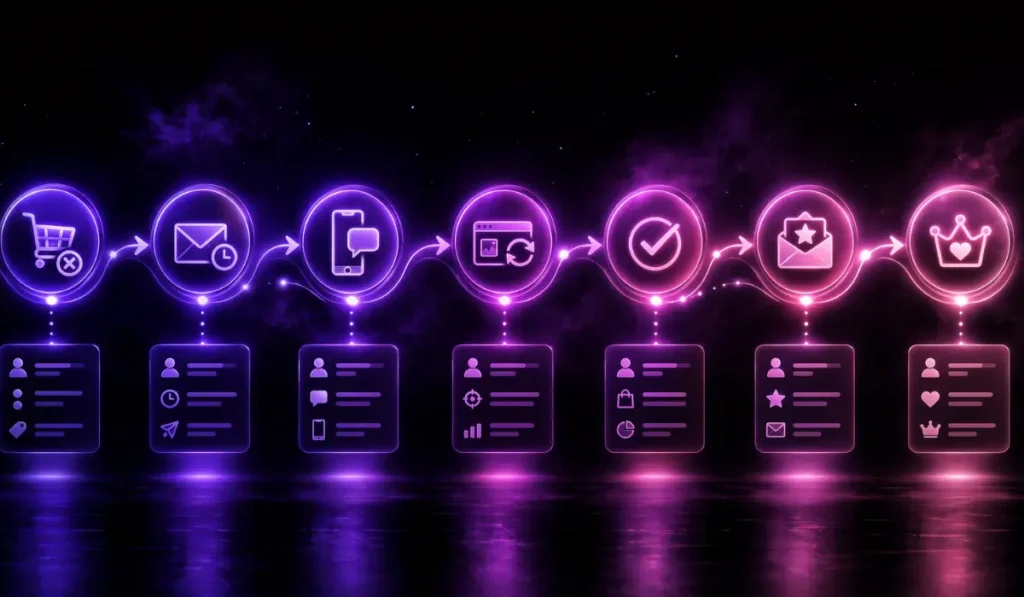
Abandoned cart emails and SMS reminders can bring shoppers back after they leave checkout.
These messages should be clear, helpful, and timely. They can remind shoppers what they left behind and answer common concerns like shipping, returns, or product details.
Post Purchase Follow Up
After a purchase, email can support the customer experience.
Post purchase emails can include:
- Order updates
- Product care tips
- Setup instructions
- Related products
- Review requests
- Email marketing trends
- Loyalty offers
Win Back Campaigns
Win back campaigns help bring back inactive customers.
These can include new product updates, helpful reminders, personalized offers, or loyalty rewards.
Reorder Reminders
Some products need to be bought again.
Reorder reminders work well for consumables, beauty products, home goods, pet products, and other repeat purchase items.
6. Improve Product Pages and Checkout for More Conversions
Marketing cannot fix a weak buying experience.
If shoppers click your ads or visit from search but your product pages are confusing, your sales will suffer.
Strong Product Pages Reduce Doubt
Good product pages should include:
- Clear images
- Useful descriptions
- Product options
- Pricing
- Reviews
- Shipping details
- Conversion focused store design
- Return information
- Clear add to cart button
- Related products
The goal is to help shoppers decide with confidence.
Clear Checkout Reduces Friction
Checkout should be simple.
Avoid long forms, hidden costs, unclear shipping, confusing payment options, and forced account creation when possible.
A smooth checkout can help more shoppers complete the order.
Reviews, Shipping, Returns, and Payment Options Build Trust
Trust details matter near the buying decision.
Show reviews, return policy, shipping information, payment options, and support details where shoppers need them.
7. Use AI Personalization Carefully
AI can help ecommerce brands create more relevant shopping experiences.
But it should be used carefully. Personalization should feel helpful, not invasive.
Product Recommendations
AI can help suggest products based on browsing behavior, purchase history, or customer interests.
This can help shoppers find items they may like faster.
Dynamic Offers
Dynamic offers can change based on customer behavior, cart value, or purchase history.
For example, a returning customer may see a loyalty offer. A new visitor may see a starter bundle.
Audience Segmentation
AI can help group customers by intent, behavior, or value.
This helps brands send more relevant emails, ads, and offers.
Human Review Still Matters
AI should support the strategy, not control it blindly.
Human review is still needed for brand tone, offer quality, customer trust, and accuracy.
8. Connect CRM, Automation, and Customer Data
Smart ecommerce marketing works better when customer data is connected.
Your store, CRM, email platform, ad accounts, and automation tools should work together.
Connect Email, Ads, Sales, and Store Behavior
When systems are connected, your business can understand what shoppers do.
For example:
A shopper views a product
They join your email list
They add to cart
They leave without buying
They receive a reminder
They see a retargeting ad
They return and buy
They receive post purchase follow up
That is a connected customer journey.
Segment Customers Based on Actions
Customer actions can help you create better segments.
Useful segments may include:
- New subscribers
- First time buyers
- Repeat buyers
- High value customers
- Cart abandoners
- Inactive customers
- Product category interest
- Location based groups
Use Automation to Support Follow Up
Automation helps your team respond faster without sending the same message to everyone.
It can support lead nurturing, cart recovery, review requests, customer education, and loyalty campaigns.
9. Build Trust with Reviews, Support, and Clear Policies
Shoppers need trust before they buy.
Even strong ads and good product pages can fail if customers feel unsure.
Reviews Reduce Buyer Doubt
Reviews show that real people have bought from your store.
Use reviews on product pages, landing pages, emails, and retargeting campaigns.
Fast Support Can Save the Sale
Some shoppers have one small question before buying.
Fast support through chat, email, contact forms, or social messages can help close the gap.
Clear Return and Shipping Policies Matter
Make policies easy to find and easy to understand.
Clear shipping and return information can reduce hesitation before checkout.
10. Track the Metrics That Show Real Growth
Smart ecommerce marketing is not about doing more. It is about knowing what works.
Clicks and views are useful, but they do not tell the full story.

Metrics to Track
Important ecommerce marketing metrics include:
- Conversion rate
- Average order value
- Customer acquisition cost
- Return on ad spend
- Customer lifetime value
- Repeat purchase rate
- Cart abandonment rate
- Email revenue
- Product page performance
- Revenue by channel
Why Profit Matters More Than Clicks
A campaign can get many clicks and still lose money.
Strong reporting helps you see which channels, products, offers, and audiences bring real profit. This helps you spend smarter.
Common Ecommerce Marketing Mistakes to Avoid
Many online stores lose money because their marketing channels are not connected.
Common mistakes include:
- Running ads without fixing product pages
- Ignoring SEO
- Using weak product feeds
- Sending the same email to everyone
- Having no abandoned cart flow
- Having no review strategy
- Running ads without retargeting
- Tracking clicks but not profit
- Relying too much on discounts
- Sending traffic to slow pages
- Ignoring mobile shoppers
- Not following up after purchase
Fixing these issues can improve sales without always increasing ad spend.
How Benzify Helps U.S. Businesses Grow Ecommerce Sales
Benzify helps U.S. businesses build e-commerce marketing systems that connect traffic, conversion, recovery, retention, and analytics.
The goal is not just to get more visitors. The goal is to help more of the right visitors become customers.
Ecommerce Marketing Strategy
Benzify can help plan your ecommerce growth system across SEO, ads, social media, email, automation, and analytics.
SEO and Product Content
Benzify can help improve product pages, category pages, metadata, internal links, and search focused content.
Google Ads and Retargeting
Benzify can help create Google Ads campaigns, Shopping campaigns, retargeting funnels, and creative testing plans.
Email, SMS, and Automation
Benzify can help set up email and SMS flows for abandoned carts, post purchase follow up, win back campaigns, and retention.
Social Commerce and UGC Campaigns
Benzify can help plan social content, UGC campaigns, creator-style assets, and social media strategies that support online sales.
Analytics and Performance Tracking
Benzify can help track sales, conversions, customer value, channel performance, and campaign results so you know what to improve.
Want smarter ecommerce marketing that connects your store, ads, email, SEO, and customer follow up?
Final Takeaway
Smart ecommerce marketing in 2026 is about connected growth.
SEO, product feeds, paid ads, social commerce, email, SMS, UGC, product pages, reviews, automation, and analytics work better when they support one customer journey.
A strong strategy helps your business attract the right shoppers, convert more visitors, recover lost sales, retain customers, and track what is truly profitable.
For U.S. businesses, the biggest opportunity is not just doing more marketing. It is making every channel work together.
For U.S. businesses, the biggest opportunity is not just doing more marketing. It is making every channel work together.
FAQs About Smart Ecommerce Marketing
What is smart ecommerce marketing?
Smart ecommerce marketing is a connected strategy that uses SEO, paid ads, product content, social media, email, SMS, retargeting, reviews, automation, and analytics to increase online sales.
How can U.S. businesses boost online sales in 2026?
U.S. businesses can boost online sales by improving product pages, using SEO, running better ads, building email and SMS flows, adding reviews, using retargeting, and tracking profit-focused metrics.
What are the best ecommerce marketing strategies for 2026?
The best strategies include ecommerce SEO, product feed optimization, Google Shopping, paid ads, social commerce, UGC, email automation, SMS recovery, checkout improvement, AI personalization, and customer retention.
How does AI help ecommerce marketing?
AI can help with product recommendations, audience segmentation, send time testing, dynamic offers, ad targeting, and customer behavior analysis. Human review is still needed to protect trust and brand quality.
How do email and SMS help online stores increase sales?
Email and SMS help recover abandoned carts, follow up after purchase, ask for reviews, send reorder reminders, promote offers, and bring inactive customers back.
What ecommerce marketing metrics should businesses track?
Businesses should track conversion rate, average order value, customer acquisition cost, return on ad spend, customer lifetime value, repeat purchase rate, cart abandonment rate, and revenue by channel.